The following invocation is said to be a treasure from Paradise.
Invocation:
‘La haul a wala quwwata illa billah’
Treasure From Paradise
Hadith:
Narrated by Abu Musa Al-Ash’ari: ‘The Prophet (SAW) started ascending a high place or hill. A man (amongst his companions) ascended it and shouted in a loud voice, “La ilaha illal-lahu wallahu Akbar.” (At that time) Allah’s Apostle was riding his mule. Allah’s Apostle said, “You are not calling upon a deaf or an absent one.” and added, “O Abu Musa (or, O ‘Abdullah)! Shall I tell you a sentence from the treasure of Paradise?” I said, “Yes.” He said, “La haul a wala quwwata illa billah.”’ – Bukhari, Volume 8, Book 75, Number 418
Backbiting is something that is so commonplace these days. Whether it is talking about the actions of our friends or the faults of our family members, it is something that people do without hesitation. This is not something to take lightly. In fact, Allah (SWT) has described this act is in the Quran in very graphic detail:
Surah 49 Verse 12: And do not spy or backbite each other. Would one of you like to eat the flesh of his dead brother?
Definition:
Talking about a person in a manner, which he/she would not like – even if it is true.
Hadith: Abu Hurairah (RA) narrated that the Prophet (SAW) said: “Backbiting means talking about your brother in a manner which he does not like. It was said to him: What is your opinion if the fault I mentioned about my brother was true? He (SAW) said: If what you said about him was true, then you have in fact backbitten him, and if that fault found is not to be true, then it is slander.” Hadith Reference: Sahih Muslim, Book 45, Number 91.
Potential Causes:
Desire to “fit in with the crowd”
When a group of people are backbiting about a particular person, people tend to join in instead of prohibiting this act. If this situation ever arises, remember the following verse from the Quran:
Surah 43 Verse 67: Close friends, that Day, will be enemies to each other, except for the righteous
Desire to laugh at someones expense
A backbiter might enjoy mocking a person behind their back, however they have committed a grave sin.
Hadith: Abu Hurairah (RA) narrated that the Prophet (SAW) said: “A Muslim is the brother of a Muslim. He neither oppresses him nor humiliates him nor looks down upon him.” Hadith Reference: Sahih Muslim, Book 45, Number 40.
Desire to “listen in” but not participate
A common misconception is that it is only the person that is backbiting that is committing a sin.
Hadith: “Whoever is present while a Muslim is humiliated before him, and is able to assist him [and yet does not], Allah will humiliate him before [all of] creation.” Hadith Reference: Ahmad in al-Musnad, 3/487 and Suyuti in Al-Jami` As-Saghir, 2/510, #8375.
If we hear backbiting occurring, we should always try to stop it. In fact, Allah (SWT) mentions how good this act is in the Quran:
Surah 23 Verses 1-5: “Certainly will the believers have succeeded: They who are during their prayer humbly submissive And they who turn away from ill speech And they who are observant of Zakat And they who guard their private parts.”
Potential Punishments:
Here a few reasons to stop backbiting altogether.
Displeasing Allah
Allah (SWT) mentions the following verse in the Quran:
Surah 104 Verse 1: Woe to every slanderer and backbiter
This verse illustrates that it is not mankind that are cursing the backbiter, nor the angels, but Allah (SWT) directly!
Punishment in the Grave
Scratching ones face with nails of copper in the grave.
Hadith: Anas ibn Malik (RA) narrated that the Prophet (SAW) said: “When I was taken up to heaven I passed by people who had nails of copper and were scratching their faces and their breasts. I said: Who are these people, Jibrail (AS)? He replied: They are those who were given to back biting and who aspersed people’s honour.” Hadith Reference: Abu Dawud, Book 36, Number 4860.
Losing Good Deeds
On the Day of Resurrection, the person who has been backbiting may have to pay for this sin with their good deeds.
Hadith: Abu Hurairah (RA) narrated that the Prophet (SAW) said: “Do you know who is poor? They (the Companions of the Holy Prophet SAW) said: A poor man amongst us is one who has neither dirham with him nor wealth. He (the Holy Prophet SAW) said: The poor of my Ummah would be he who would come on the Day of Resurrecton with prayers and fasts and Zakat but (he would find himself bankrupt on that day as he would have exhausted his funds of virtues) since he hurled abuses upon others, brought calumny against others and unlawfully consumed the wealth of others and shed the blood of others and beat others, and his virtues would be credited to the account of one (who suffered at his hand). And if his good deeds fall short to clear the account, then his sins would be entered in (his account) and he would be thrown in the Hell-Fire.” Hadith Reference: Sahih Muslim, Book 45, Number 77 (Alternative Reference: Sahih Muslim, Number 2581 or Book 32, Number 6251).
Backbiting
Sincere Repentance:
When seeking forgiveness from backbiting, four conditions must be met.
1.) Stop committing the sin
2.) Sincerely regret committing the sin
3.) Make practical effort to prevent committing the sin again
4.) If the sin involves another person, seek their pardon and forgiveness
Hadith: Abu Hurairah (RA) narrated that the Prophet (SAW) said: “Whoever has wronged his brother, should ask for his pardon (before his death), as (in the Hereafter) there will be neither a Dinar nor a Dirham. (He should secure pardon in this life) before some of his good deeds are taken and paid to his brother, or, if he has done no good deeds, some of the bad deeds of his brother are taken to be loaded on him (in the Hereafter).” Hadith Reference: Sahih Bukhari, Volume 8, Book 76, Number 541.
The scholars have said that an alternative to number four is that you make dua for the backbitten person and return to the same gathering where the backbiting took place and speak highly about the backbitten person. This is further explained in the below lecture by Majed Mahmoud.
Final Points:
Satan loves Backbiting
Remind yourself that you can lose your good deeds from backbiting and that it will please Satan, whilst displeasing Allah (SWT).
Surah 17 Verse 53: And tell My servants to say that which is best. Indeed, Satan induces [disagreements] among them. Indeed Satan is ever, to mankind, a clear enemy.
Humble Yourself
Instead of discussing the faults of others, why don’t you look internally and ask yourself questions such as: “Have I recited the Quran today?” “Have I read any voluntary prayers today?” “Have I repented to Allah (SWT) today?”
Angels are Documenting
Always remember that the angels on your left and right shoulder and writing everything that you say and do.
Surah 82 Verses 10-12: And indeed, over you are keepers, Noble and recording; They know whatever you do.
Reward for avoiding Backbiting
Hadith: Abu Musa (RA) narrated that the Prophet (SAW) said: “Some people asked Allah’s Apostle, “Whose Islam is the best? i.e. (Who is a very good Muslim)?” He replied, “One who avoids harming the Muslims with his tongue and hands.” Hadith Reference: Sahih Bukhari, Volume 1, Book 2, Number 10.
Hadith: Sahl bin Sa’d (RA) narrated that the Prophet (SAW) said: “Allah’s Apostle said, “Whoever can guarantee (the chastity of) what is between his two jaw-bones and what is between his two legs (i.e. his tongue and his private parts), I guarantee Paradise for him.” Hadith Reference: Sahih Bukhari, Volume 8, Book 76, Number 481.
Surah Quraysh is a Makkan Surah and takes its name from a word in the first verse.
You can find a tafsir for this Surah below. The main lesson to take away is to be thankful to Allah (SWT) for everything that He has given us. The example used in this Surah is referring to the blessings that had been bestowed on the Quraysh tribe and how they should be thankful to Allah (SWT) for everything that He had provided to them.
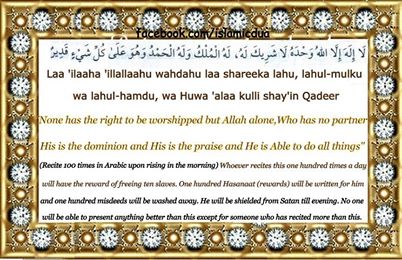
This dua has the reward of freeing ten slaves, gaining 100 good deeds, removing 100 bad deeds, protection from Shaythan for the whole day and nobody will be able to do a better deed.
Dua:
Say ‘La ilaha illal-lah wahdahu la sharika lahu, lahu-l-mulk wa lahu-l-hamd wa huwa ‘ala kulli shai’in qadir’ 100 times a day In Shaa Allah.
Translation: ‘None has the right to be worshipped by Allah (SWT) alone, Who has no partner. His is the dominion and His is the praise, and He is Able to do all things’
Freeing ten slaves
Hadith:
Narrated by Abu Hurairah: Allah’s Apostle (SAW) said: ”Whoever says: ‘La ilaha illal-lah wahdahu la sharika lahu, lahu-l-mulk wa lahu-l-hamd wa huwa ‘ala kulli shai’in qadir,’ one hundred times will get the same reward as given for manumitting ten slaves; and one hundred good deeds will be written in his accounts, and one hundred sins will be deducted from his accounts, and it (his saying) will be a shield for him from Satan on that day till night, and nobody will be able to do a better deed except the one who does more than he.” – Bukhari, Volume 8, Book 75, Number 412
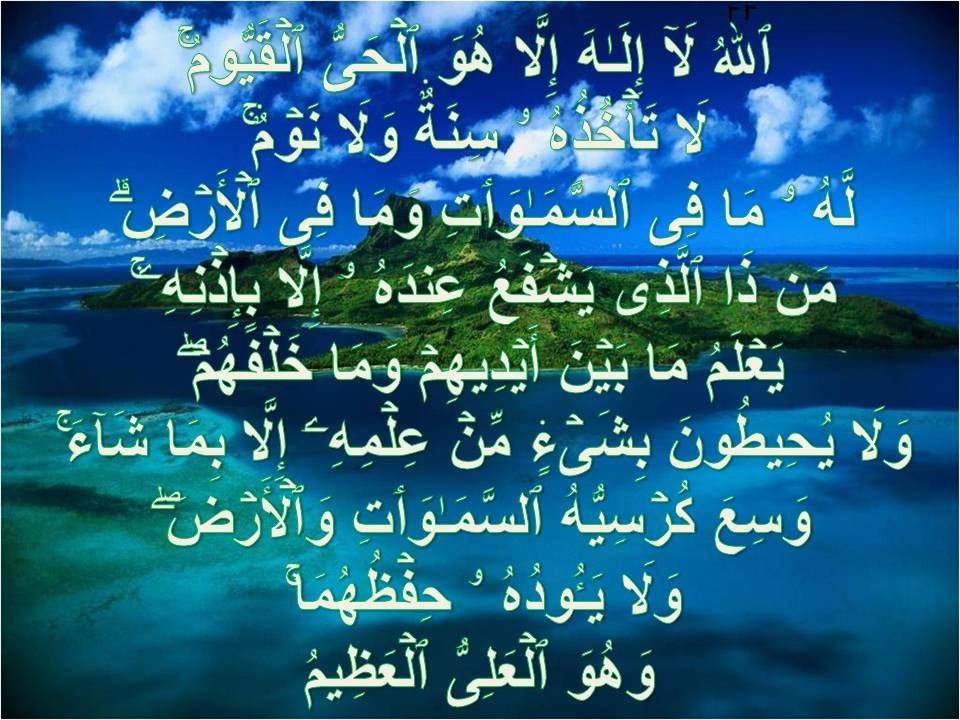
Ayatul Kursi is a very beautiful and easy to learn verse (2:255), which carries incredible virtues!
For instance, if you read it after every single obligatory prayer, there will be nothing standing between you and Paradise except death (Sahih Al-Jami 6464, Ibn As-Sunni 121 and As-Sahir 5/339).
Also, if you read this verse before sleeping, a guardian from Allah (SWT) will remain with you and Satan will not be able to come near you until the morning (Fathul-Bari 4/487 and Riyad as-Salihin 9/1020).
Ayatul Kursi
You can listen to Ayatul Kursi by the exceptionally talented Faith Seferagic in the video below In Shaa Allah.
Translation: Allah! La ilaha illa Huwa (none has the right to be worshipped but He), the Ever Living, the One Who sustains and protects all that exists. Neither slumber, nor sleep overtake Him. To Him belongs whatever is in the heavens and whatever is on earth. Who is he that can intercede with Him except with His Permission? He knows what happens to them (His creatures) in this world, and what will happen to them in the Hereafter . And they will never compass anything of His Knowledge except that which He wills. His Kursiextends over the heavens and the earth, and He feels no fatigue in guarding and preserving them. And He is the Most High, the Most Great.
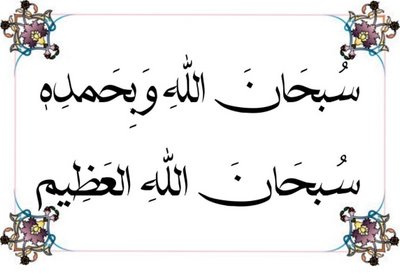
There is a very simple dua that is light on the tongue and very heavy in the balance on the Day of Judgement.
Dua:
Say ‘Subhan Allah Al-‘Azim’ and ‘Subhan Allah wa bihamdihi’
SubhanAllahi Wabihamdihi SubhanAllahil Azim
Hadith:
Narrated by Abu Hurairah: The Prophet (SAW) said, “There are two expressions which are very easy for the tongue to say, but they are very heavy in the balance and are very dear to The Beneficent (Allah), and they are, ‘Subhan Allah Al-‘Azim and ‘Subhan Allah wa bihamdihi.'” – Bukhari, Volume 8, Book 75, Number 415
The famous Hadith referring to the “people of the Ditch” has got its own movie!
The story of Obaid is an excellent one for the whole family enjoy and contains a lot of useful lessons that we can all apply to our daily lives In Shaa Allah.
Quranic Reference: Surah 85 Verse 4
Hadith Reference: Sahih Muslim, Book 42, Number 7148
Surah Al-Kawthar is the shortest Surah in the Quran. It contains three verses and its title is taken from the first verse.
This Surah is mentioned in an authentic Hadith, referring to how those that invent new things into the religion, will not be able to drink from the river of Al-Kawthar on the Day of Judgement.
Hadith:
Narrated by Anas ibn Malik (RA): One day when the Prophet (SAW) was still among us, he took a nap, then he raised his head, smiling. We said to him (SAW): ‘Why are you smiling, O Messenger of Allah (SAW)?’
He (SAW) replied: ‘Just now this Surah was revealed to me: In the Name of Allah, the Most Gracious, the Most Merciful. Verily, We have granted you (O Muhammad SAW) Al-Kawthar. Therefore turn in prayer to your Lord and sacrifice (to Him only). For he who hates you, he will be cut off.’
Then he (SAW) said: ‘Do you know what Al-Kawthar is?’ We said: ‘Allah and His Messenger know best.’ He said: ‘It is a river that my Lord has promised me in Paradise. Its vessels are more than the number of the stars. My Ummah will come to me, then a man among them will be pulled away and I will say: “O Lord, he is one of my Ummah” and He will say to me: ‘You do not know what he did (innovated/invented) after you were gone.’


 Western Muslim UK